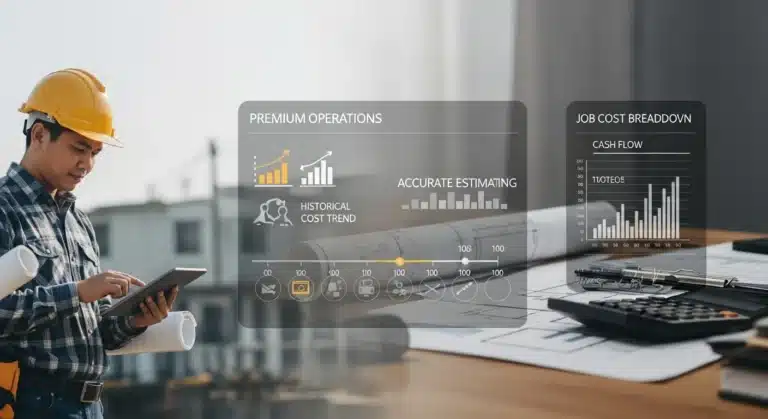
Imagine: You’ve just completed a new project. You’ve got product in the pipeline, crews on standby, and it seems that it’s all good to go. However, it’s been a week after starting the job, and your bank balance is already thinner than expected because there are 30 days before you can make another progress claim. Sounds familiar?
If you’re a contractor, cash flow management is more than just numbers on a page — it’s the lifeblood of your business. In that way, your crew gets paid, materials remain on site, and work progresses. If you don’t know how the cash is flowing through your practice, those “profit jobs” still provide an express route to the poorhouse. That’s why you can’t just be O.K. at cash flow analysis, but you must have the wits to practice it and apply it in the long-run for income maximisation.
So in this article, we are going to discuss the key notes and nuggets of information that every contractor should be aware of to keep their cash flow going upwards and have a strong financial business foundation.
What You Need to Know About Cash Flow as a Contractor
Basically, cash flow is about the money coming in and going out of your business. If you are a builder, these payments are made to you when your client pays—this might be in the form of deposits, progress claims, milestone payments, or final payment. That gets washed through labour and materials, equipment costs, and overheads, along with the fees paid to subcontractors.
Contracting, unlike those consistent monthly revenue businesses, is a capital investment pay-in-rear business. But when it’s not planned for, this timing gap can lead to a cash crunch even though the jobs have seemed profitable on paper.
GET the CYCLE of your CASH FLOW when you get money in and exactly when it goes out—you put yourself on a path to lasting financial freedom.
Invest in lowball cash flow estimates. A strong cash-flow forecast is essentially a straight-line weather report to be able to liquidate your money.
Rather than scrambling each week to respond to what’s coming in and going out, a forecast is an educated guess of where your cash inflows and outflows are headed, so you can prepare rather than be caught off guard by indecisive decisions. Contractors who rely on rolling weekly forecasts, especially within a 13-week window, can spot early indicators that cash squeezes will be arriving in the future rather than after it’s too late.
To get started:
- Estimate anticipated client fees and when they will be received
- Summarize the pull cost of all cost lists (labor, material, overheads, etc.)
- As the forecast changes, adjust accordingly—ensuring it still makes sense as long as you are looking out into future quarters.
- This relatively basic concept can be a game-changer for knowing when you might run out of cash and how to make decisions about spending, invoicing, or scheduling the work better.
Reduced Invoice and Payment Cycle.
Getting paid faster is one of the fast-tracks to improved cash flow.
Ask yourself these:
- At what point can we invoice following the accomplishment of a milestone?
- Are your contract terms clear about when you are getting paid?
- Do you offer early pay discounts?
A contractor could also manage his cash flow through the terms of his contracts, dealing with deposits, progress claims, and payment timeframes. Early pay discounts or conditions precedent to the release of retainage can also be game changers.
Analyse Your Costs and Expenses. Cash flow is not just what’s coming in, but also how and when money is leaving your company.
Take a close look at:
- Job costs (material, labor, subs.)
- Indirect overhead expenses
- Equipment and maintenance costs
- Insurance, permits, and taxes
That way, you can be totally “in the know” and not be “pinched” if any surprise cost shows up on this line item (as YOU ARE COUNTING BOTH DIRECT AND INDIRECT COSTS!).
Build Strategic Cash Reserves
“There’s always one more month’s expenses,” Lies notes: the proverbial rainy day is never far away for many businesses, and an unanticipated cash outflow, a delay in payment, or a surprise price hike can hit even healthy firms.
Ideally, you would have three weeks’ worth of operating expenses squirreled away in the bank. That buffer could give you a feeling of safety and the ability to take some risks in your venture without stretching yourself financially. Using the best bookkeeping services ensures you can manage these expenses efficiently and keep track of your cash flow without stress.
-Results Facilitation by the technology employed
-No more guesswork with post it note v No more paperspreadsheets.
Technology Because of stuff like accounting and project management software that we have access to these days, you can literally automate your cashflow tracking, invoicing and forecasting so:
- Keep your eye on the board as you witness your cash flow vibe in real time.
- Generate accurate forecasts quickly
- Don’t miss holes while they exist
If you use the tools in your process, they will save you time and assist in making good choices with data.
Turn Cash Flow into Growth
- It’s not cash flow as a necessity; it is cash flow as a superpower.
- If you feel that your cash is in good shape, consider these options:
- Higher prices and terms are offered to suppliers
- Boldly take on big projects with no fear.
- Employees and vendors will be more loyal
- Acquire more intelligent equipment and expansion opportunities
Maximizing your cash flow isn’t about living lean. It means that you should have a strong business model and base your money decisions on one that enables long-term stability and growth.
Final Thoughts
This is not a one-time endeavor for contractors, cash flow analysis is a powerful tool you want to take out and use frequently to ensure that your business remains on solid financial ground. Instead, you’ll be pestered with having to make sure from the beginning that your billing and scheduling are right every single day, adding interest on anything from this point forward so that we don’t pay a company without them paying us first, and dedicating large swaths of readily accessible money physically and emotionally stashed in locked-off bank accounts earmarked specifically to help growth opportunities for your future.
Cash flow means less stress, more control, and the kind of business growth you crave. Begin your analysis today, and you’ll get in a position to win and work smart!